











/

Personal Website

Eric BarrosSenior Technology Leader | Infrastructure & Operations

Bridging Enterprise Resilience & Product Velocity.

Technology Leader with 19 years of global experience. I build the technical foundation (SRE, Cloud, Networks) that allows engineering teams to ship software with velocity and zero downtime. Currently bridging the gap between complex infrastructure and product strategy.

Download CV

Choose the version that matches the role context.

Engineering Impact at

Syngenta
Mars
Huawei
BT
Itau
Bradesco
DuPont
TAM Airlines
Algar
Avis
CenturyLink
NotreDame Intermedica
Rico
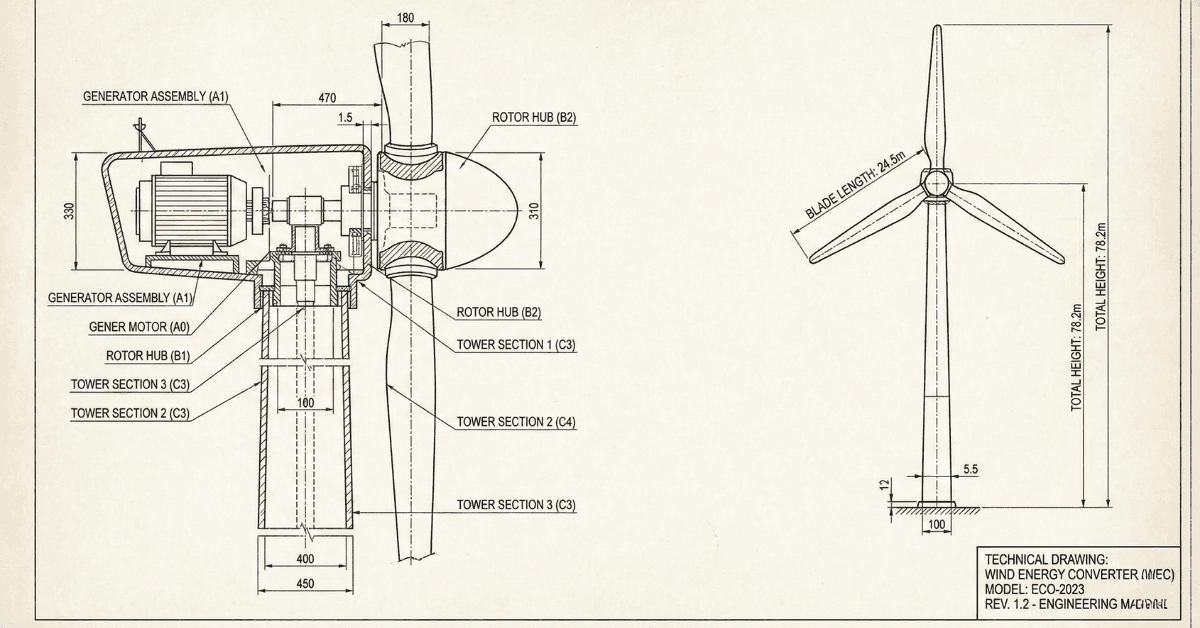
Technical drawing of a wind turbine with engineering annotations.

Kinetic Blueprint

Precision and structure behind continuous motion.

About

From Operations to Strategy. My career is built on a simple premise: reliability is a feature. I spent nearly two decades in high-stakes environments—from Tier-1 banking backbones to global supply chains—ensuring that critical systems never fail.

Today, I operate at the intersection of Deep Tech and Product Strategy. I don't just keep the lights on; I design architectures that enable business growth. Whether acting as a Fractional CTO for SMEs or leading Crisis Management for multinationals, my focus is on reducing technical debt, automating toil, and creating systems that are resilient by design.

I bring a "Founder Mindset" to engineering: I care about costs, I prioritize business outcomes over shiny tools, and I believe that clarity beats complexity every time.

How I Think

Tools change. Technologies evolve. What remains constant is how problems are approached.

I approach network engineering as a system, not a collection of isolated components.

When facing a problem, I prioritize understanding impact before jumping to solutions. I look for signals, patterns, and constraints, using metrics and observability to guide decisions rather than assumptions.

Incident response, for me, is not about heroics. It is about structured thinking: detect early, isolate accurately, validate hypotheses, act deliberately, and always close the loop with learning and improvement.

I strongly believe that good engineering is defined not only by how systems work when everything is ideal, but by how they fail, how they recover, and how understandable they are to the people operating them.

  • Metrics before opinions
  • Trade-offs over best practices
  • Systems over quick fixes
  • Clarity enables scale

Selected Experience

Wind turbine holding steady beneath storm clouds.

Momentum Under Pressure

Endurance in hostile conditions, engineered to keep moving.

Strategic Consulting (Q7 Ops) | Founder & Principal Architect

  • Acting as Fractional CTO for SMEs, delivering high-impact automation and AI solutions (approx. R$ 500k in value generated).
  • Designed data-driven architectures and self-managing operational processes, allowing for a planned exit from daily operations.

Global Agribusiness (Syngenta) | Regional Tech Lead

  • Orchestrated network stability for LATAM & North America (470+ sites), achieving Zero Major Incidents for 3 consecutive years.
  • Led global governance initiatives that reduced chronic incidents and established new resilience standards for logistics hubs.

FMCG Giant (Mars) | Senior Network Engineer

  • Managed critical infrastructure for 90+ sites across the Americas, reducing critical incident recurrence by 78% through structured Root Cause Analysis (RCA).
  • Acted as Regional Tech Lead and Global SME for Problem Management, bridging the gap between local operations and global strategy.

Tier-1 Banking & Telecom (Huawei / BT) | Critical Engineering Consultant

  • Served as Level 4 escalation point for major financial institutions (Itaú/Bradesco), managing complex BGP/MPLS backbones.
  • Led "War Room" crisis response teams for global service delivery, institutionalizing new troubleshooting protocols for high-severity incidents.

Principles

Historic windmill in motion against dark storm clouds.

Legacy Kinetics

Raw mechanical force that still defines reliability.

Infrastructure is a product

Clarity beats complexity

Observability before assumptions

Automation with responsibility

Systems matter more than heroics

Design for failure, not perfection

Where to Go Next